Have you seen our current professional promotion? Click now to learn more!

Info & Download
A workplace is reimagined
How a sawmill in the Black Forest relieved the strain on an existing facility—without having to build a new one
A woodworking company with a long tradition faced a simple but pressing question: How can a physically demanding workplace be made noticeably less strenuous when there is neither room for full automation nor a willingness to undertake a major renovation? The answer was a custom-designed partial automation solution.
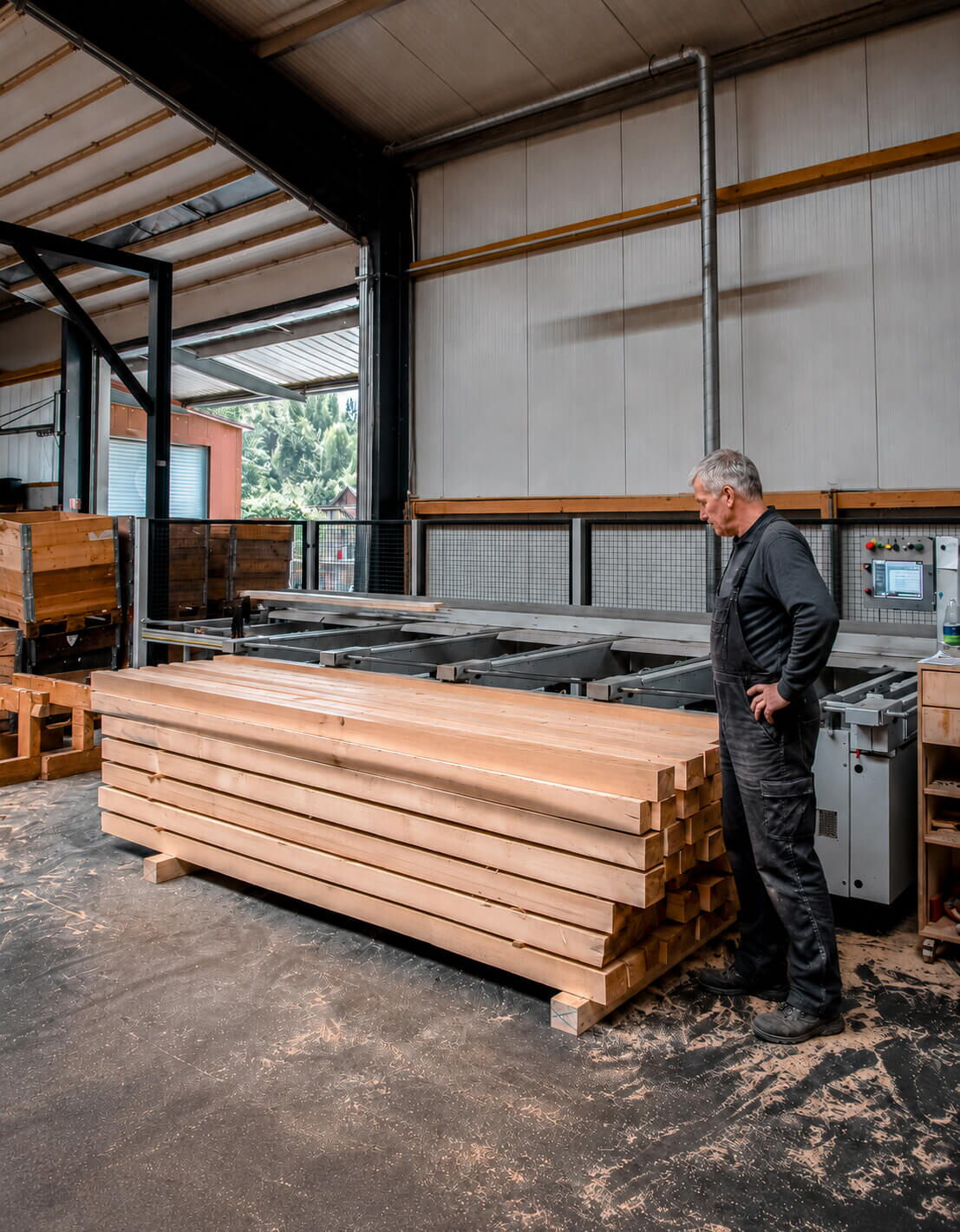
For decades, a sawmill and planing mill in the Black Forest has been processing wood into custom packaging as well as sawn and planed lumber. Demand is high, and the labor market is tight. Management was faced with a question familiar to many companies in the industry: How can work be made more efficient and, at the same time, more ergonomic when skilled workers are in short supply and available space is limited?
The Initial Situation
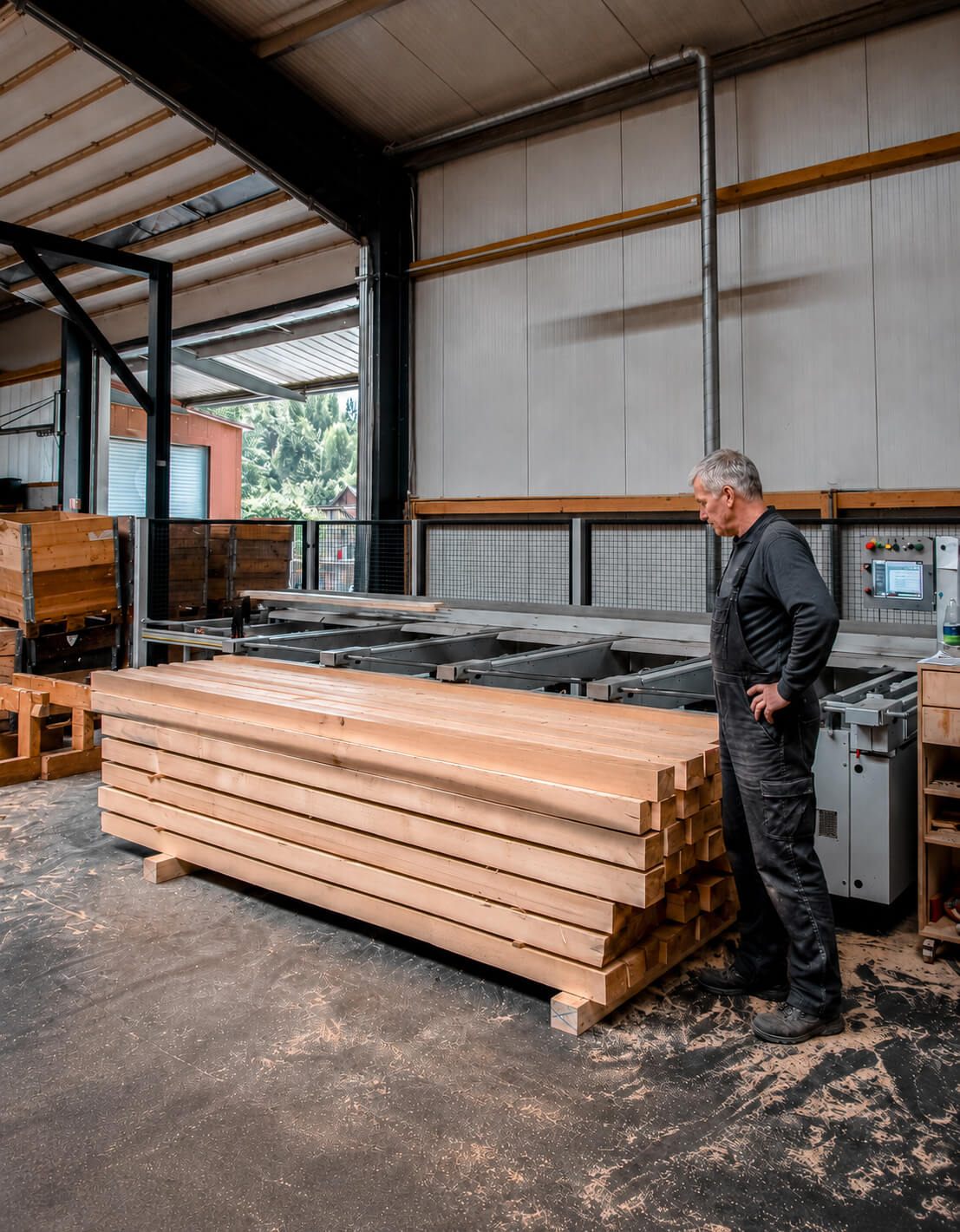
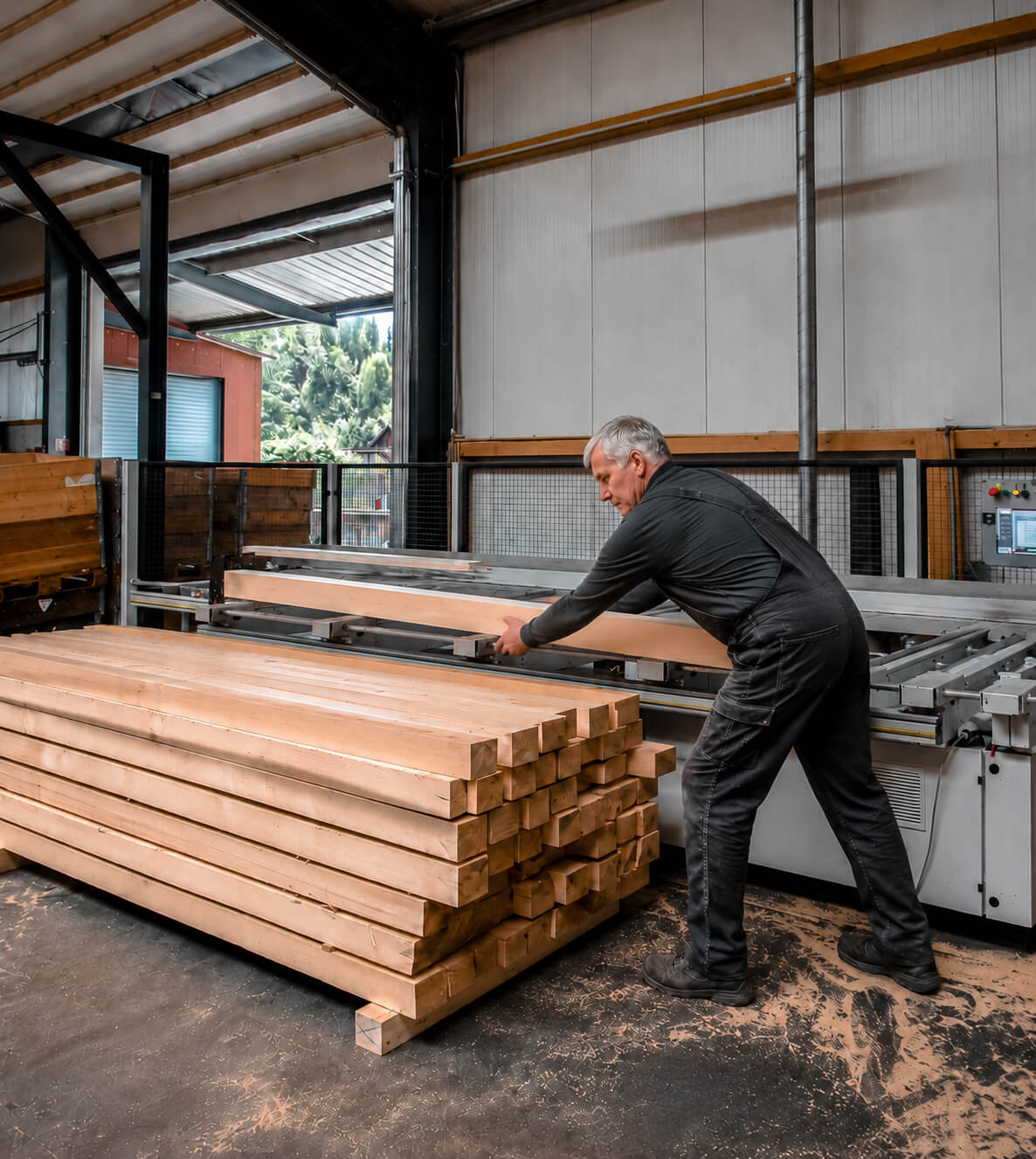
At the crosscut saw, an experienced employee manually loaded boards and square timbers of various thicknesses, widths, and lengths—up to five meters—one by one. The square timbers weigh up to 40 kilograms. Over the years, this task has become increasingly physically demanding for an employee who has been working at this station for many years and is now nearing retirement.
That is precisely what made the situation more than just a matter of efficiency for the company: In the tight labor market for skilled workers in wood processing, it is virtually impossible to find an experienced replacement on short notice. If the physical strain at this workstation had continued to increase, it could have forced the employee to quit sooner or later—leaving a gap that cannot be easily filled. So the question was not only how to reduce the strain on the workstation, but also how to retain the existing knowledge and experience within the company for as long as possible.
The Challenge
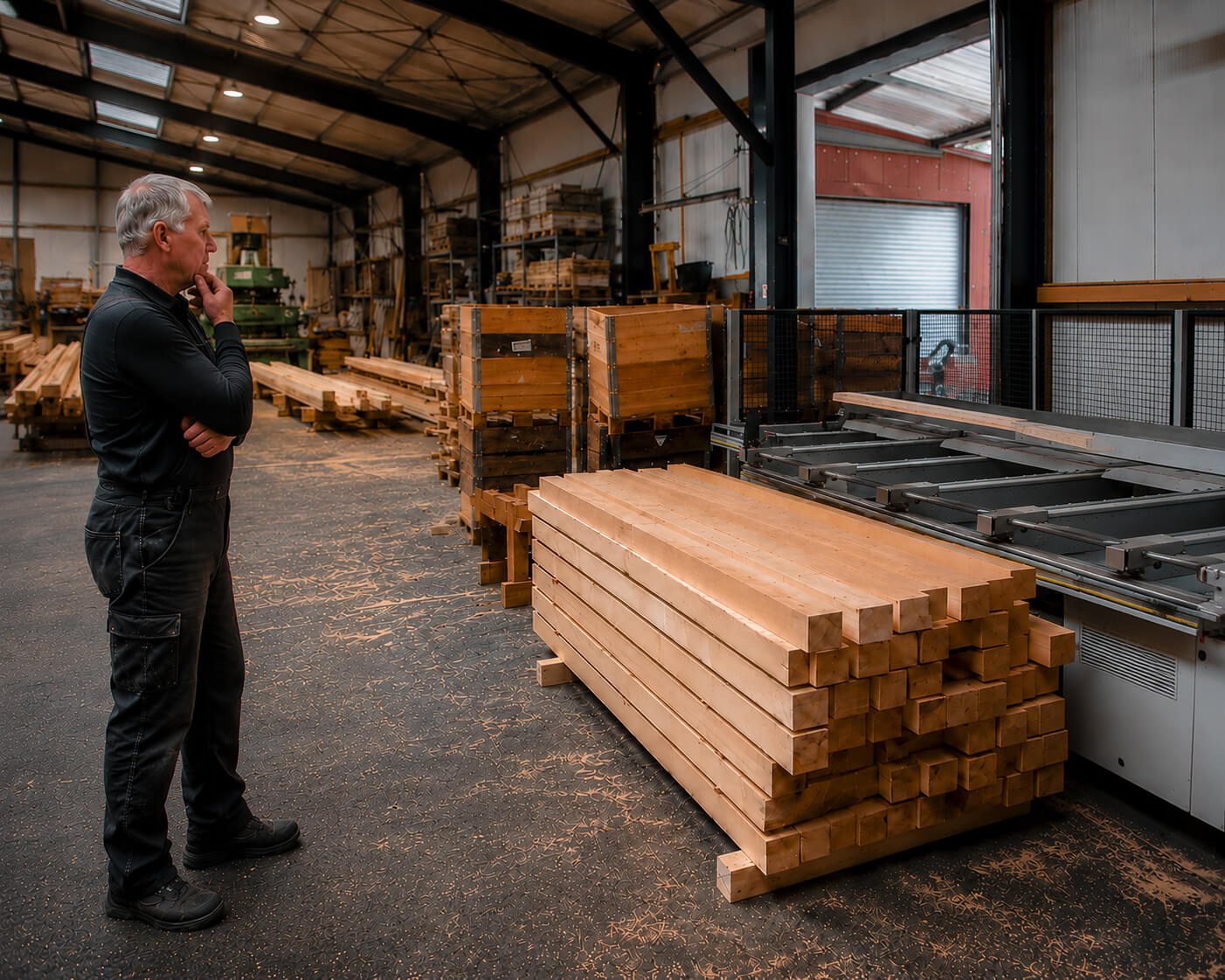
One obvious idea would have been full automation. However, space around the existing crosscut saw was limited—there simply wasn’t enough room for additional conveyor systems and the safety fences required for full automation. Instead, the goal was to find a solution that would integrate into the existing workstation without requiring a complete redesign.
The Solution
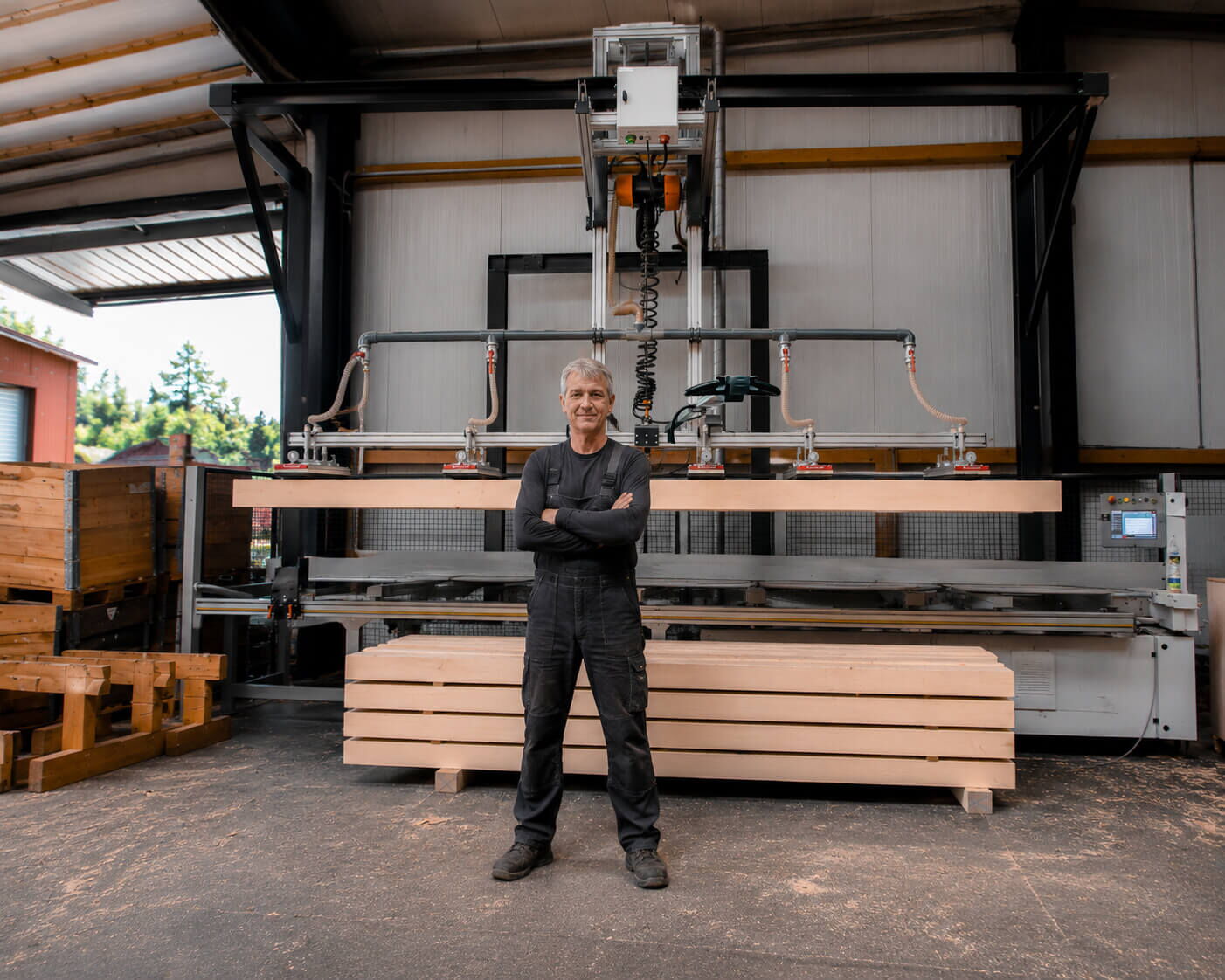
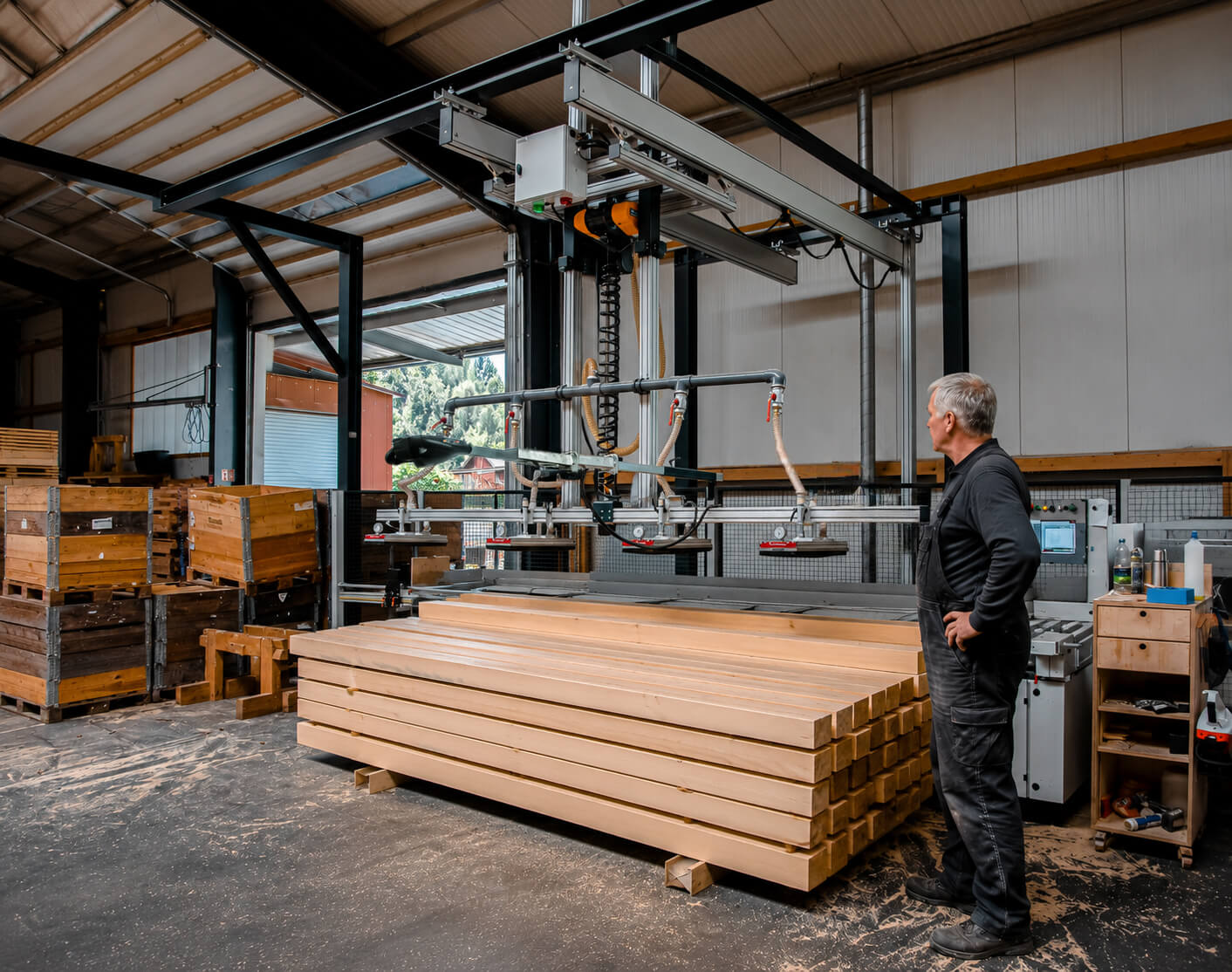
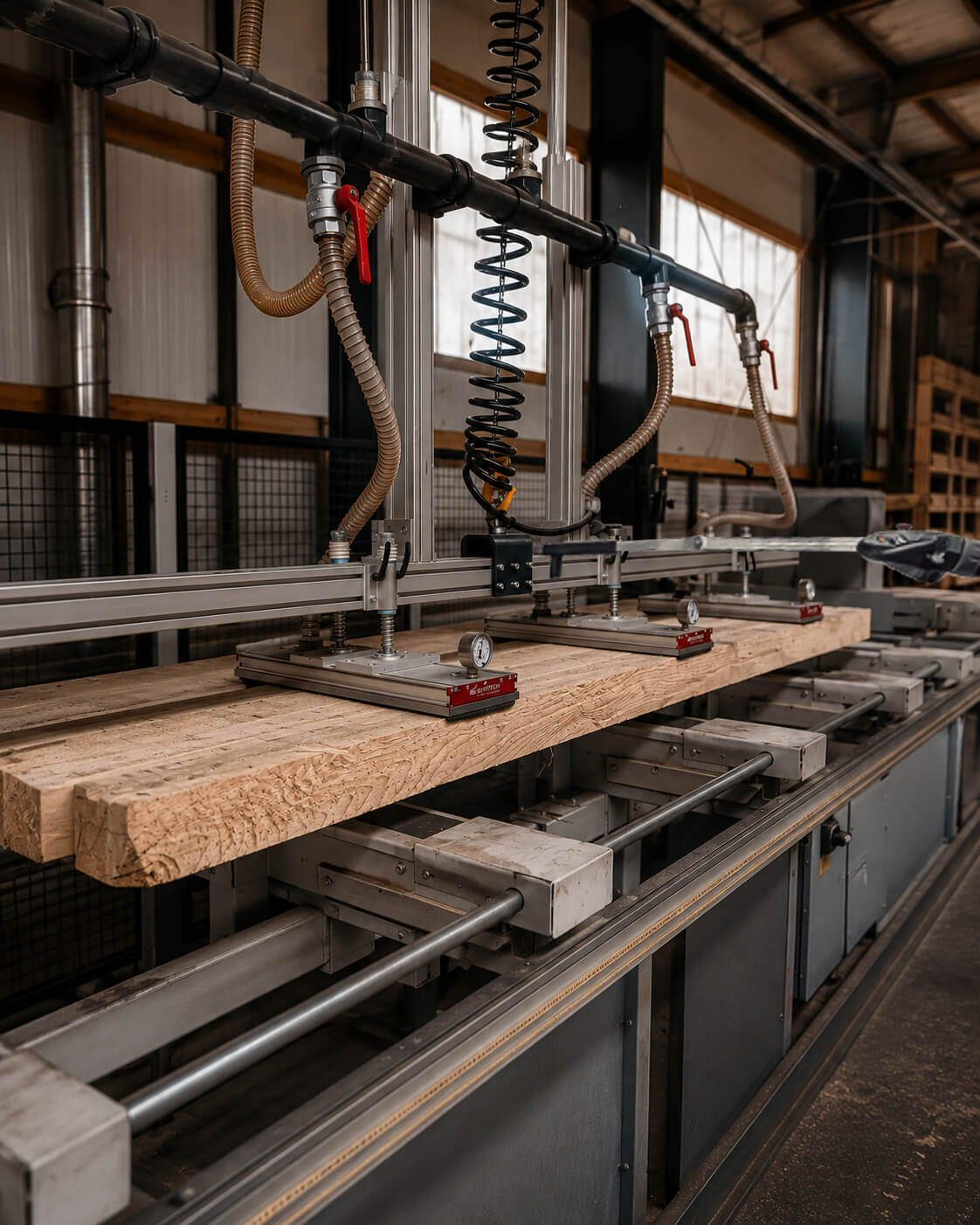
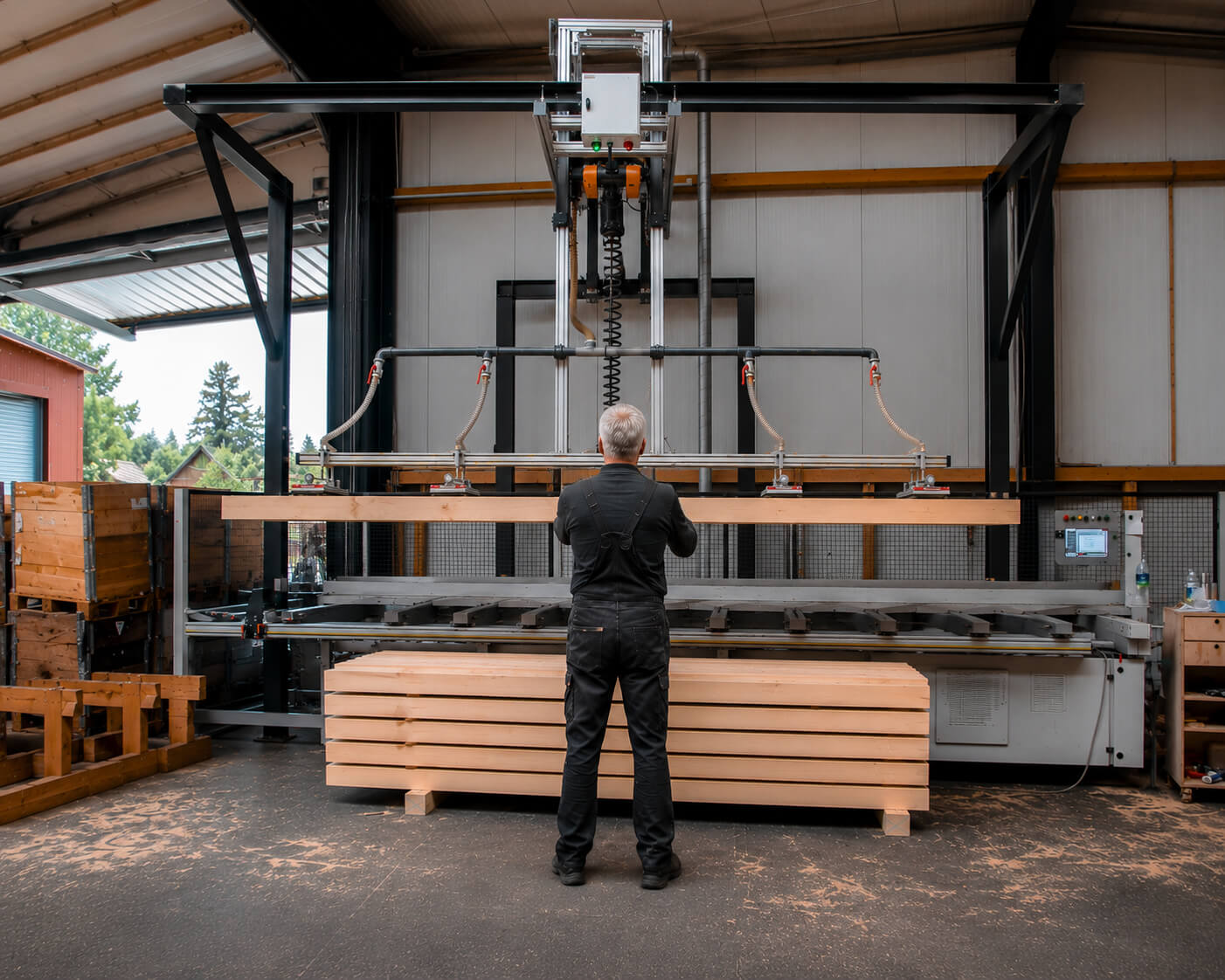
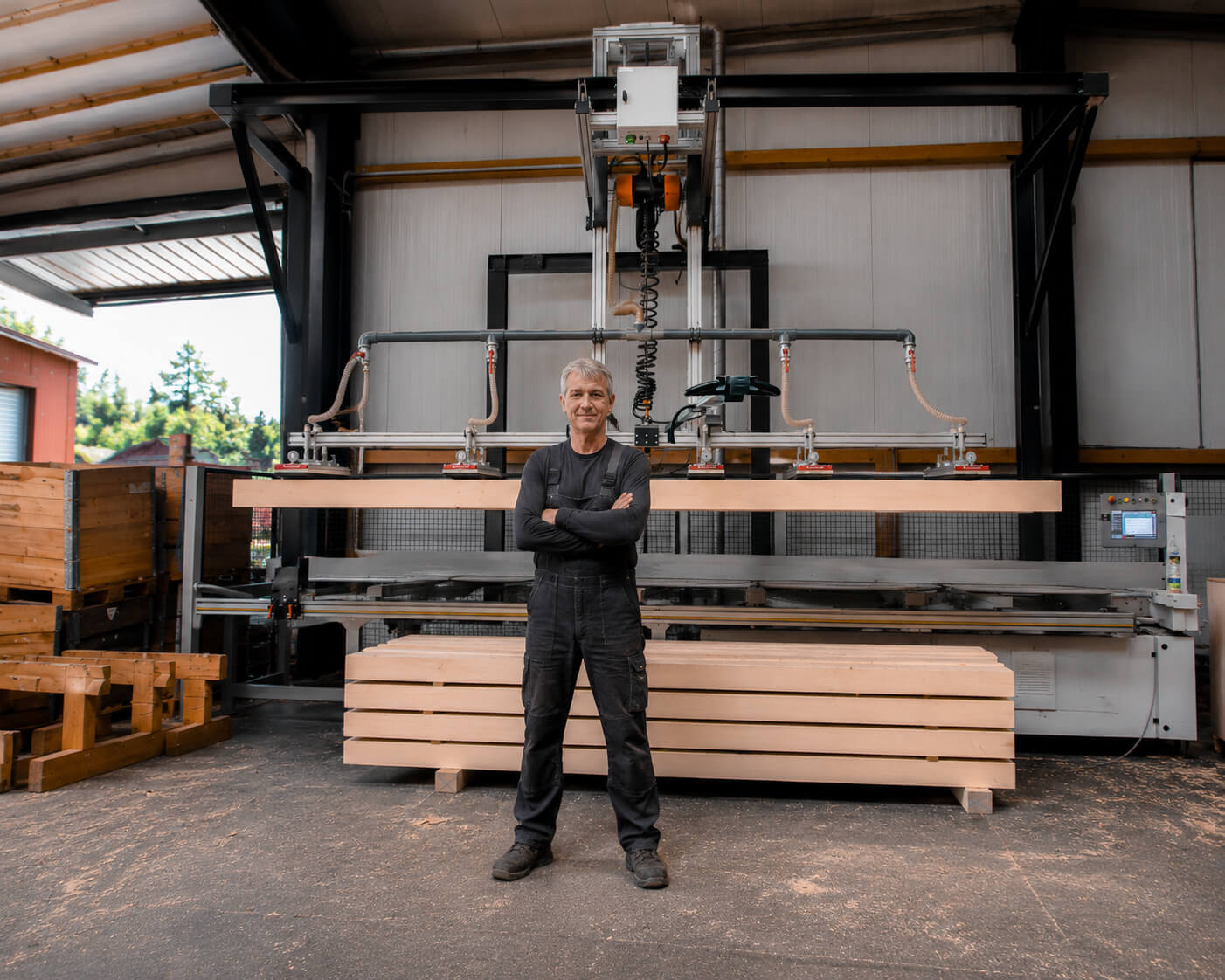
In collaboration with euroTECH Handling, a semi-automated system tailored specifically to the workstation was developed: a vacuum gantry equipped with eT-Gripper flat grippers that can be moved directly to the existing crosscut saw via a smooth-running crane track. The surface grippers were designed to securely handle pieces of wood ranging from 70 mm in width to 5,000 mm in length as a single layer. It is important to note that this is a semi-automated system, not a fully automated process. The employee continues to control when suction is applied, when air is released, when the load is lifted, and when it is moved using an ergonomically designed control handle. The employee specifies the workflow—the technology handles the lifting of the heavy loads.
The Impact on Day-to-Day Work
Instead of lifting each piece of lumber individually by hand, the vacuum gantry now lifts an entire layer at once. The employee moves it into position and cuts it with significantly less physical effort. The actual task—feeding the crosscut saw—has remained the same. What has changed is the physical strain it places on the employee. Because the operator retains control over the entire process, this workstation also does not require the safety fences that full automation would have necessitated—an aspect that carries additional weight when space is limited.
The result
A physically demanding workplace has evolved into one where experience and technology work together. The employee, who has been familiar with the crosscut saw for years, is still the one who controls the process. What has changed is that he no longer has to lift the heavy square timbers by hand. For him personally, this means one thing above all: he can continue working in his familiar role until retirement, rather than letting the physical strain force him to leave the job prematurely. For the company, this means that valuable practical expertise remains on staff—at a time when it is difficult to find new skilled workers in wood processing. This was achieved without major structural changes and without putting additional strain on the already tight staffing situation. It’s an example of how not every solution has to involve full automation to make a real difference in day-to-day work.
Conclusion
Not every business needs a comprehensive automation solution. Especially when it comes to existing machinery and limited space, a custom-designed semi-automation solution may be the better choice—both for the business and for the employees who use this workspace every day.
euroTECH Handling—the smart way to lift loads!